Marine engineering alumni chart lucrative career voyages
Recent students are now on their way to qualifying as officers or working on superyachts around the world
Recent Marine Engineering students are well on their way to lucrative and rewarding careers thanks to the skills they developed at Coleg Llandrillo.
Past learners are now following cadetships to qualify as deck, engineering or electro-technical officers, with some aspiring to be captains earning up to £100,000 a year.
Others are working on superyachts, travelling the world while gaining experience and additional qualifications that can supercharge their careers.
Grŵp Llandrillo Menai offers Marine Engineering courses at Level 2 and Level 3 which prepare students for boundless opportunities within the sector.
Both courses develop skills such as marine engineering, boatbuilding, yacht maintenance, and navigation, as well as offering the opportunity to achieve a long list of additional industry-standard qualifications, including recognised RYA qualifications for operating powerboats and yachts.
Here, three recent alumni of Coleg Llandrillo’s Marine Engineering courses talk about how Coleg Llandrillo helped launch them towards their dream careers.
Sarah Langton (deck officer cadet)
Sarah Langton is in the second year of a deck officer cadetship with British Petroleum (BP). She is on the way to qualifying as a third deck officer, and hopes to work her way up to one day become a captain.
Third deck officers can earn around £40,000 a year - and most do not have to pay tax on their earnings, while captains can attract salaries of more than £100,000.
Sarah travelled to the Rhos-on-Sea campus from Birkenhead three days a week for her Level 2 and 3 Marine Engineering, after deciding on a complete change of direction from her university course.
She said: “I did interior design at uni but didn’t enjoy it, and left after the first year. I saw the course at Coleg Llandrillo when it randomly popped up as I was scrolling. I used to want to work on cruise ships as I wanted to travel, so I thought, ‘I’ll give it a go’.
“The first week I was thinking ‘What am I doing?’ but within a few days I absolutely loved every minute of it.”
Sarah praised lecturer and programme leader Andy White, skills supervisor Jim Lehane and technician/assessor Fraser Longbone for fuelling her enthusiasm.
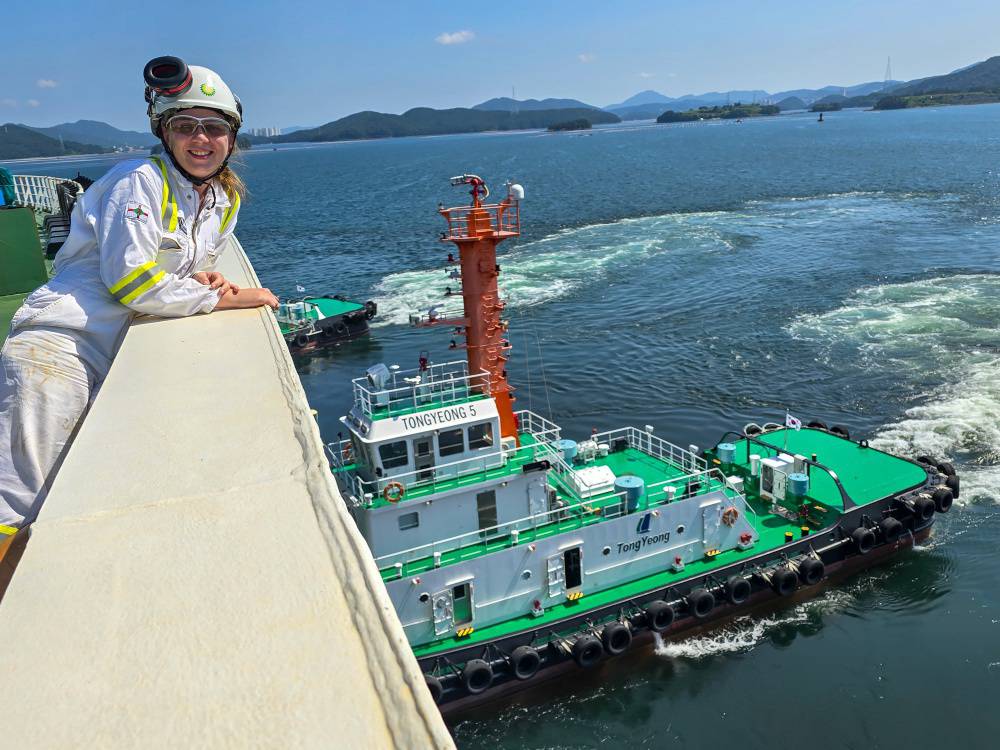
“Andy, Jim and Fraser all had different experiences and different knowledge but they all had a passion around water and boats and it gives you that passion towards it,” she added.
“All three of them invested their time in you, and they welcomed mistakes as part of the learning process.”
Sarah said the skills she learned at Rhos-on-Sea gave her a headstart on some of her peers when she started her cadetship.
“Even though I’ve gone into the deck side rather than the engineering side, the skills I’ve learned have been a massive added value to me,” she said.
“Some people started my course without knowing anything, but I’d already learned a lot of the terminology, naval architecture etc. We’ve done an engineering unit because we still have to know that, so I already had that foundation of knowledge, and it’s been a really good stepping stone.”
Craig Parry (junior engineer cadet)
Craig Parry, from Llysfaen in Colwyn Bay, is a junior engineer cadet with ship management company Anglo-Eastern, sponsored by shipping company Unity.
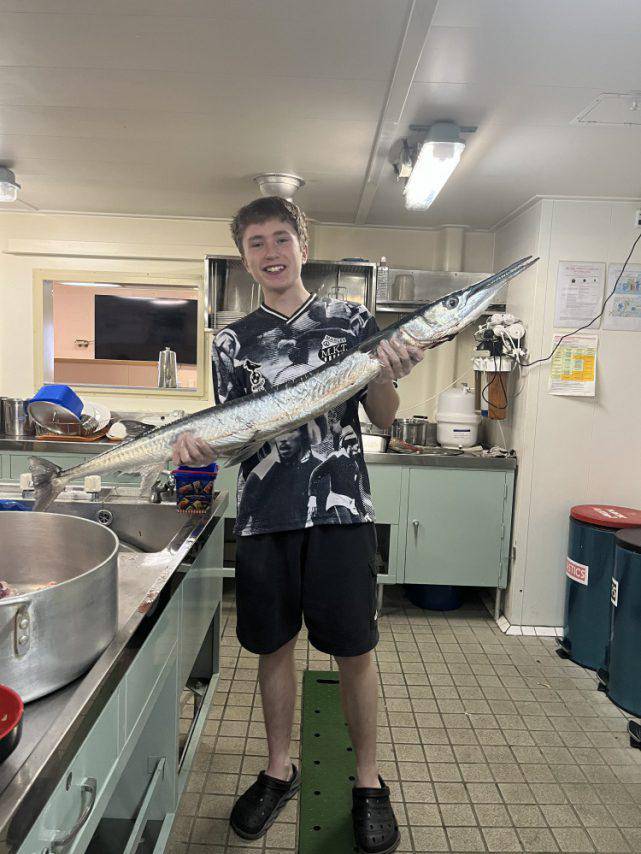
He secured his cadetship aged 18 after completing Level 2 and Level 3 Marine Engineering at Coleg Llandrillo. Now 20, he will soon be qualified as a Fourth Engineer with an attractive starting salary.
“Lads I know who are qualified are on £34,000, and the youngest you can be is about 21, 22,” he said. “I’m on deep sea ships, and because we spend six months out of the country you don’t pay income tax.
“During the cadetship, you get £600 per month training allowance. On ship everything is covered - your rent, your food etc. So you get paid enough to eat quite comfortably and be happy - it’s definitely worth it.”
During his cadetship, Craig has made the most of his shore leave, saying: “I’ve been very lucky. I’ve been with bulk carriers most of the time ferrying coal - I followed the equator round so it was constantly humid and we had lots of shore leave.
“I went from Liverpool to Singapore to Vietnam, and to three states in Australia. I had in total a month and a half off ship in Australia. I also got to go on shore in New Zealand and climbed Mount Maunganui, an extinct volcano and sacred Maori site.
“All of that was in my first five months at sea - and I was on slow ships. Some people do double the speed and see even more of the world.”
Craig’s first introduction to marine engineering was via the Level 1 programme, spending one day a week at college while he was still at school.
He said: “The choices were bricklaying, plastering and marine engineering, and I chose marine engineering.
“The course was really good. Jim and Fraser are both absolute legends. I was quite a naughty boy in school but Jim straightened me out!”
He then joined the full-time programme, studying Levels 2 and 3 over two years.
“I’d never liked classrooms but Andy made it enjoyable,” he said. “The activities you do, the hands-on experience - they did everything they could to make it as engaging as possible.”
“The way the course is set up, it’s called marine engineering, but you do everything - chart work, tides… all the things you need if you’re going to be a deck officer and drive the ship. So you get a good gauge of everything to help you decide what you want to do.”
Harri Would (deck hand and launch driver)
Since finishing college two years ago, Harri Would has worked as a deck hand on superyachts in and around the Mediterranean. When he’s not at sea, the 21-year-old also works as a launch driver for Holyhead Sailing Club.
Harri studied Level 2 Marine Engineering, and as part of the course he had the opportunity to complete other industry qualifications such as the Royal Yachting Association (RYA) Powerboat Level 2 certificate.
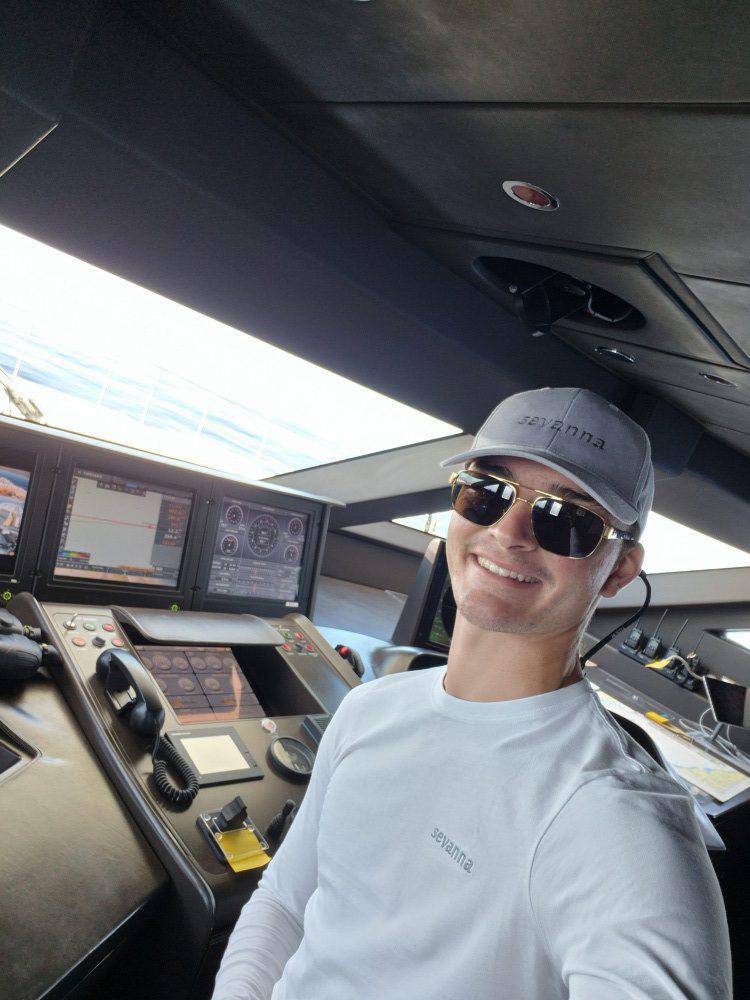
“The Powerboat Level 2 got me my job here at the sailing club, while my first job on a yacht was because they recognised the City & Guilds in Marine Engineering,” he said. “The course is a great start for people who want to work on boats, and it did open doors.”
Harri is glad he took the plunge and enrolled at Coleg Llandrillo, even though it meant an 88-mile round trip from his home in Holyhead to the Rhos-on-Sea campus three days a week.
“I had done my first year of sixth form but I wasn’t feeling it,” he explained. “My dad who works in the industry found the course and suggested it.
“It was expensive because I was travelling from Holyhead, but it was well worth it. I learned so much and it was such a good environment to be in. I really enjoyed being there. I got my job at the sailing club through being on the course, because Andy said they were looking for someone in the marina.”
As a deck hand, Harri can earn up to £3,000 a month, and doesn’t have to pay for food and accommodation.
“It’s amazing,” he added. “I get to travel the world and do it in luxury. It is work, it’s not a holiday, but I’ve been to Barcelona, Gibraltar, Italy, Cyprus, Greece, Croatia, Montenegro, and Malta.”
Harri has added numerous yachting qualifications to his CV and has also qualified as an advanced scuba diver.
He said: “My plan is to work my way up the ladder of working on deck, and hopefully be a captain one day.”
Grŵp Llandrillo Menai offers Marine Engineering courses at Coleg Llandrillo’s Rhos-on-Sea campus, and Coleg Meirion-Dwyfor’s Hafan campus in Pwllheli. Learn more here or go to gllm.ac.uk/courses/marine-technology